
Have you ever wondered what a style guide is? Maybe you’ve come across style guides in the past and would now like to know more about what the creation of such a document entails? So let’s look at the process of style guide creation, shall we? 😃
For me, style guides are my bread and butter. But many people can’t really make heads or tails of a document like that – so I’m here now to tell you that style guides really aren’t that complicated. Rather, a style guide is a brilliant tool for companies who are looking to establish themselves as a strong brand.
Now, what do I mean when I say strong brand? Not just one thing, as there are many aspects to what makes a brand strong. But here are some characteristics all strong brands share:
- Recognition value: By showing up the same way in all channels (social media, website, support, product packaging, newsletter, stores, …) you ensure your customers know you – no matter how, when or where they see you.
- Appealing communication: By consistently communicating in a way that fits both, your customers and your company, you create an appealing image. Customers feel like they’re in the right place and are confident that your company can solve their problem.
- Clear positioning: By talking about carefully chosen topics in a specific way, you show what you stand for and what your values are. Ideally, this matches with what your customers care about, creating an emotional connection that ensures the right people choose your company.
And a style guide can help you with all of that – it’s like a road map that ensures your customers like you if you follow it. The fact that it clearly defines how and what you talk about facilitates communication and content creation significantly. As such, your style guide gives you a valuable gift: clarity on how your company communicates. This, in turn, has a positive effect on how your company is perceived.
As you can see, a style guide can unlock something that might feel like a communication superpower – certainly something that every single company can profit from, right? So, let’s look at what a style guide needs to actually unfold all this potential. 🙂
3 things EVERY style guide needs
Spoiler alert: There’s obviously more than 3 things. 😉 But the following 3 things are the foundation – without brand personality, target audience, and tone of voice, it all comes crashing down.
These are the essentials of any style guide, so if you’re looking to get one, you should know a little something about the first two things in that list (or at least be able to answer questions about them). The third item is what I create based on all the info I get from you. 💪
What I need to emphasise here is that creating a style guide is always a collaborative process. Yes, you hire me to do that, and yes, I take care of sorting through everything, drawing up the document and establishing your new tone of voice.
BUT!
Always keep in mind that nobody knows your business as well as you do. Maybe you built it from the ground up or have been part of the company for years. Maybe you made some of the strategic decisions about positioning and operations yourself or would like to establish a new course for the business now.
Either way, you know the company infinitely better than I ever will – you know the products, the vibe in the office, specific pain points your customers have and how they communicate these to you, which words they use, what peeves them most, etc.
I’m on the outside, looking in, which is a huge advantage that also contains one disadvantage: Even with thousands of pages of reference material and endless research, I won’t know these things as well as you. The caveat? I need to know them to really capture the essence of your business. And that means that you’ll have to reserve some time to tell me about all of it. (Don’t worry, I’ll ask you all the right questions in a structured meeting. 😉)
Once I have all the info, I can get started. The first thing I tackle is the brand personality, even if I have a bit of a chicken and egg problem with brand personality and target audience: These two kinda cause each other.
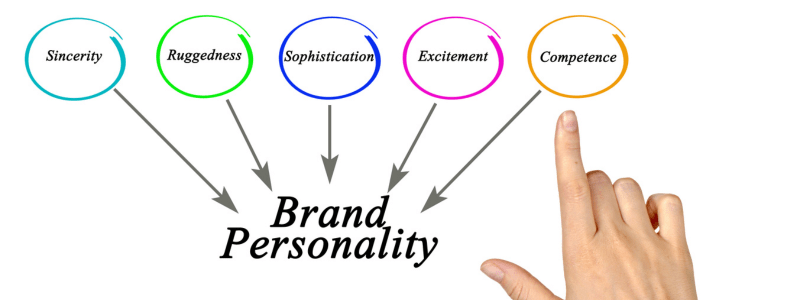
1. Must-have for your style guide: the brand personality
Defining your brand’s personality is always the first step. I usually do that by asking “Who are you as a company” (or simply “who are you”, since a style guide also makes sense for sole traders). We define 3–5 attributes that best describe the company’s personality and how it’s evident in the way your business is run.
I always make a point of adding real-life examples from your company’s day to day, or including explanations why a certain aspect is particularly important – be that with regard to the target audience, your company’s history or your goals.
For example: In the case of Ecosoft, a manufacturing company for water treatment product, who hired me to create their style guide at the start of 20025, the main focus was building trust. The reason for that is simply that water is a matter of trust – after all, we drink it and it might look fine even if it’s contaminated. So, to ensure that partners and customers actually buy Ecosoft products, they need to establish themselves as an honest, trustworthy company.
2. Must-have for your style guide: the target audience
The second pillar in the foundation of your style guide is your target audience. The reason for this is simple: In order to ensure we actually reach people with our words, we have to know who we’re talking to.
The people we address significantly influence how we talk to them and the wording we choose:
- With kids, we usually use simpler language and easier words than with grown-ups.
- When discussing a topic with experts who share our area of expertise, we use jargon and specialist terminology we would avoid (or explain) when talking to laypeople.
- In the premium sector, we address customers who are well off in a completely different way than if we were selling cheap products that are more about quantity than quality.
All these things are determined by your target audience – because if we say the right things, but use the wrong words to say them, they just won’t hit home with the people we’re trying to reach. If you’d like to see a few examples for this particular conundrum, check out this blog post about target audiences and how they influence website copy.
To give you an example for this, let’s look at style guide I created for Ruggable in 2025, where the demographic played a key role: the customers are mostly female, lead busy lives, often have a family and sometimes a full-time job, too The messaging for such a target audience have to be completely different than if we were to target students – and this is evident in the style guide.
3. Must-have for your style guide: the tone of voice
Once we’ve established your company’s identity and your target audience (at this point, I usually stop for a feedback cycle with you to make sure we got it all right), I move on to my favourite part: Creating your tone of voice – including lots of illustrative examples! 🤩
I draw on the brand personality and the target audience to explain why we’re doing things this way or that way. For example, I explain how the personality attributes we defined for your business influence your company’s communication. I include positive and negative examples to illustrate these rules, which helps people who’re no language nerds when they use the style guide and also makes it much easier to quickly check something in the document.
When deciding which topics are suitable for which communication channel, I draw on the info we have about your target audience. For companies like Ecosoft, who have more than one target audience, we’ve come up with different rules for B2B and B2C customers: In their newsletters, for example, different topics are chosen for each of these two target audiences and the topics are presented differently with different wordings.
Possible building blocks for your style guide
The three pillars mentioned above are vital for any style guide and can be treated in more or less detail. I’ve created 3-page style guide for sole traders and extremely detailed documents with 30 pages + an appendix for big companies.
The scope of a style guide is always determined on an individual basis – we look at your situation and decide what makes sense for your business. 🙂
Some of the building blocks that are a good idea for every style guide apart from the three basics discussed in this article are the following:
- Approach to inclusive, gender-neutral language – while this is fairly simple in English, the matter is quite difficult in German (a heavily gendered language with no official rules about such things). Clear guidelines are essential here.
- Important rules for grammar and formalities – even if small grammar errors aren’t the end of the world, they do chip away a bit at the (hopefully) good impression people get from your business.
- Glossary and terminology – this is particularly important for big companies, businesses with a very specific offer or if you translate a lot of your content. Having a strong glossary helps avoid confusion for your own employees as well as your customers.
- Messaging guidelines – a clear definition of the topics your company talks about and how you do it makes content creation infinitely easier.

Should you localize or translate your style guide?
This is the last point I want to make about style guides – simply because I’ve been hired to translate style guides so often already. A style guide always, always has to be localized (which means adapted to the local culture and language), not just translated.
You probably know the saying “when in Rome, do as the Romans do”, which perfectly illustrates why this is necessary: Things simply work a little differently in different countries – sometimes even in different regions of your own country.
We usually notice this when we’re on holidays or know the manifestation of this phenomenon in form of stereotypes, bias or prejudice against certain groups of people.
For example: the Greek are often characterized as relaxed (or, putting a negative spin on it, lazy); Germans are always on time (right?); people from the US are often considered materialistic and shallow; the Japanese are viewed as the epitome of discipline; and the French are seen as incredibly romantic, but also arrogant – and love their cheese and wine more than anything.
Every single one of these statements is a cultural bias or prejudice. And not a single one of them describes all people from a certain culture – far from it. And yet, they aren’t pulled out of thin air. Because every culture has its peculiarities, and every person who grows up in a certain culture is shaped by its values.
As an Austrian, for example, I have been raised to be punctual. To me, it’s a sign of respect to be on time when I meet somebody, and it feels incredibly impolite to be late. This is something I’ve seen lived by the people around me since I was born – it’s almost like it’s become part of my identity. Which was quite interesting when I moved to Ireland and started working in an international team and suddenly had to realize that my Spanish coworkers have no idea why I’m upset when they show up 15 minutes late. 😆
What I want to illustrate with this little story is the following: even if a style guide is focused on linguistic communication, there is a deep connection to the culture of the country in question. Something that works fantastically in country X might be a terrible idea in country A, and things that have to be defined in language Y don’t even exist in language B (which is particularly interesting when it comes to SEO 😉).
So, when you’re looking to create a new style guide in a new language, the source document is a brilliant reference and parts of it can simply be translated – but many parts will have to be questioned, changed, deleted or exchanged for something else. And that means that localization is the only thing that makes sense for style guides.